
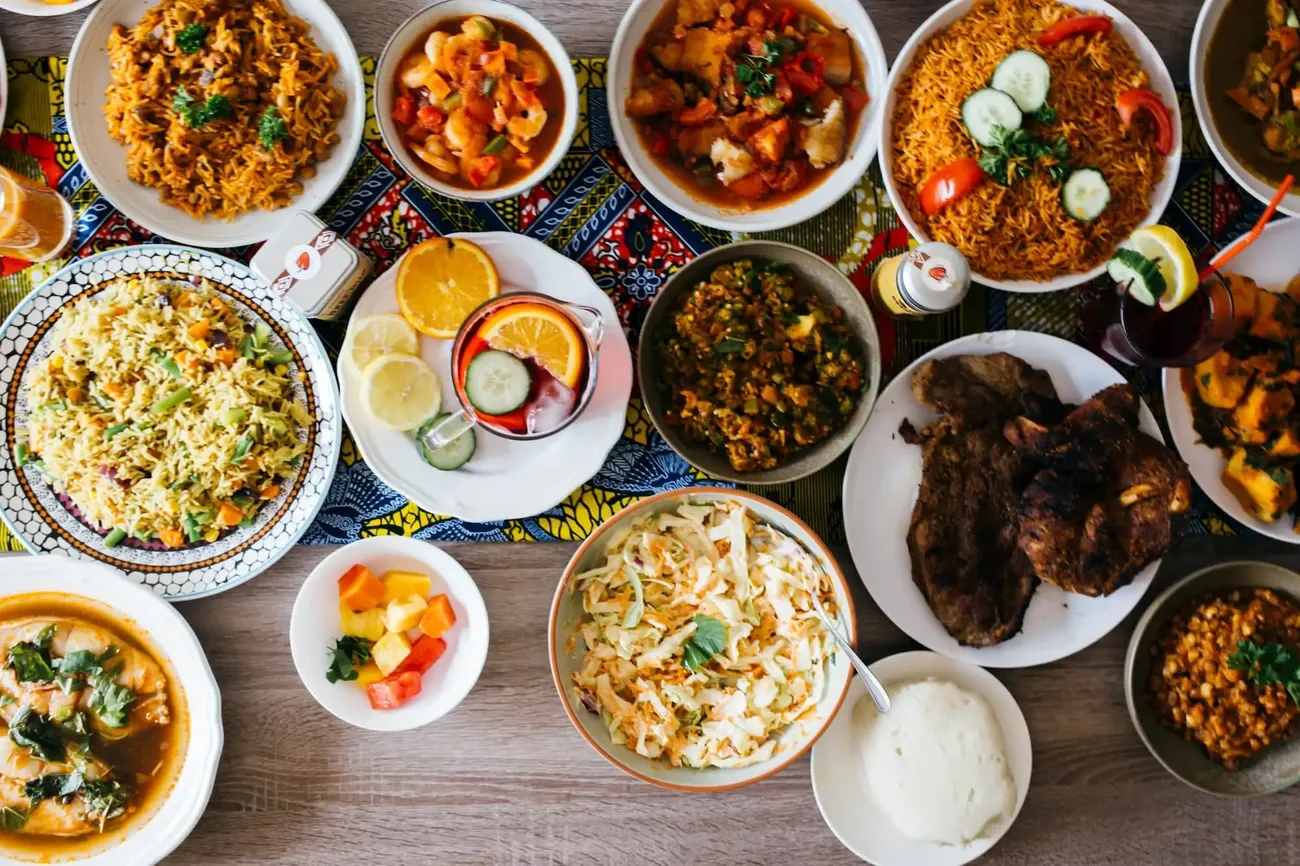
Cameroonian food is a delicious reflection of the country's extraordinary cultural diversity — from the plantain-based dishes of the south to the grilled meats of the north. Discover the dishes, drinks, and dining experiences that make Cameroon a gastronomic adventure.
Often overlooked in discussions of African gastronomy, Cameroonian cuisine is one of the continent's most diverse, satisfying, and surprising food cultures. With over 250 ethnic groups each contributing their culinary traditions, a coastline providing superb Atlantic seafood, and fertile highlands producing exceptional fruits and vegetables, Cameroon's food scene rewards adventurous eaters with flavors, textures, and combinations found nowhere else on Earth.
Ndolé: The Soul of Cameroonian Cooking
Ndolé is widely considered Cameroon's national dish, and tasting it for the first time is a revelatory experience. This rich, complex stew is built on a foundation of bitter leaves (from the ndolé plant, scientifically known as Vernonia amygdalina) that are meticulously washed and prepared to reduce their natural bitterness. The leaves are then slow-cooked with a creamy groundnut (peanut) base and typically served with fish, prawns, or meat.
The magic of Ndolé lies in the interplay between the leaves' residual bitterness and the rich, nutty sweetness of the groundnut sauce — a flavor balance that is unmistakably Cameroonian. Served with plantains, rice, or miondo (fermented cassava sticks), it is comfort food elevated to an art form. Every family has their own recipe, and debating whose Ndolé is best is practically a national sport.
Poulet DG: The Director General's Chicken
Poulet DG (Directeur Général) is one of Cameroon's most beloved dishes — and its name tells you everything about its status. This is chicken worthy of a company director: pieces of fried chicken slow-cooked with ripe plantains, carrots, green beans, bell peppers, onions, and a blend of aromatic spices that fills the kitchen with intoxicating fragrance. The plantains caramelize during cooking, creating a sweet counterpoint to the savory chicken and vegetables. Found in restaurants and homes across the country, Poulet DG is the dish Cameroonians prepare when they want to impress.
Eru: The Southwest's Forest Stew
A specialty of the Southwest Region, Eru is a hearty, deeply flavored stew made from shredded forest leaves (Gnetum africanum) cooked with crayfish, smoked fish, cow skin, and generous quantities of palm oil. Traditionally served with water fufu (a smooth, stretchy fermented cassava paste), Eru is particularly popular in Anglophone communities and represents the rich culinary traditions of the forest peoples.
Fresh Atlantic Seafood in Kribi
Along the coast in Kribi, Limbe, and Douala, fresh Atlantic seafood is exceptional and remarkably affordable. Barracuda, red snapper, sole, shrimp, crab, and lobster — grilled over charcoal with a blend of local spices and served with fried plantains and a fiery pepper sauce — are a highlight of coastal Cameroonian cuisine. The fish markets in Kribi, where the morning's catch is displayed on wooden tables just meters from the beach, are a food lover's paradise.
Cameroon Pepper Soup: The Ultimate Comfort Food
Cameroon's pepper soup is a fiery, aromatic broth of meat or fish cooked with a complex blend of indigenous spices including Alligator pepper (Aframomum melegueta), Prekese, Njansang, and country onion. It is believed to have medicinal properties — traditionally served to new mothers to restore strength, and to guests as a gesture of warm hospitality. On a cool highland evening or after a long day of travel, a steaming bowl of pepper soup is liquid gold.
Local Drinks: From Palm Wine to Bissap
Cameroon's drink scene is equally diverse. 33 Export and Castel are the most popular local beers — served ice-cold, they are the perfect accompaniment to grilled fish. But for a truly authentic experience, seek out palm wine — fresh or aged — the traditional social drink in villages across the country, tapped directly from palm trees and served in calabash gourds. For non-alcoholic options, bissap (hibiscus) juice and fresh ginger drinks are both refreshing and widely available.
Where to Eat: From Chop Houses to Fine Dining
The best Cameroonian food is often found not in upscale restaurants but in local "chop houses" — informal eateries where traditional dishes are served fresh, hot, and in generous portions. These establishments, marked by their plastic chairs, hand-painted menus, and incredible aromas, are where Cameroonians themselves eat, and they offer the most authentic dining experience available.
That said, Douala's restaurant scene has grown significantly in recent years and now includes excellent fine-dining options alongside street food. Global Bush Travel can arrange food tours, cooking classes, and market visits as part of your Cameroon itinerary — because understanding a country's food is understanding its soul.